
I had a guy come in last week. Opens his unit, reaches for his miter saw, and the whole thing just crumbles in his hands. Not literally, but close. The blade was rusted solid. The sliding rails wouldn’t budge. He looked at me like the saw had betrayed him.
I asked him how long it had been sitting. “Six months,” he says. “Maybe eight.”
Then I asked where he put it. On the floor. In the back corner. In a hard case. Never looked at it once the whole time.
That saw was probably fifteen hundred dollars new. I don’t know what he paid for it, but I know he wasn’t smiling when he walked out.
Here’s the thing. I see this constantly. People think a storage unit is just a place to put things. And yeah, technically that’s true. But if you’re putting tools in there without thinking about how they’re going to behave over time, you’re basically setting money on fire.
So let’s talk about what actually happens in there.
Concrete Floors Are Liars
You know what concrete does? It breathes. Nobody tells you that when you rent a unit. But that slab under your feet is constantly pulling moisture from the ground and releasing it into the air. Not a lot at once. Just a slow, steady seep.
Now imagine you set your table saw right on that floor. The bottom of it is sitting in a microscopic layer of moisture 24/7. You can’t see it. You can’t feel it. But the metal can. And it starts oxidizing from day one.
I’ve got a customer who’s a contractor. Does high-end renovations. He taught me something years ago that I’ve never forgotten. He brings his own pallets. Every time. Even if he’s only storing stuff for a month. He says he lost a whole set of Festool gear to a concrete floor once and he’ll never make that mistake again.
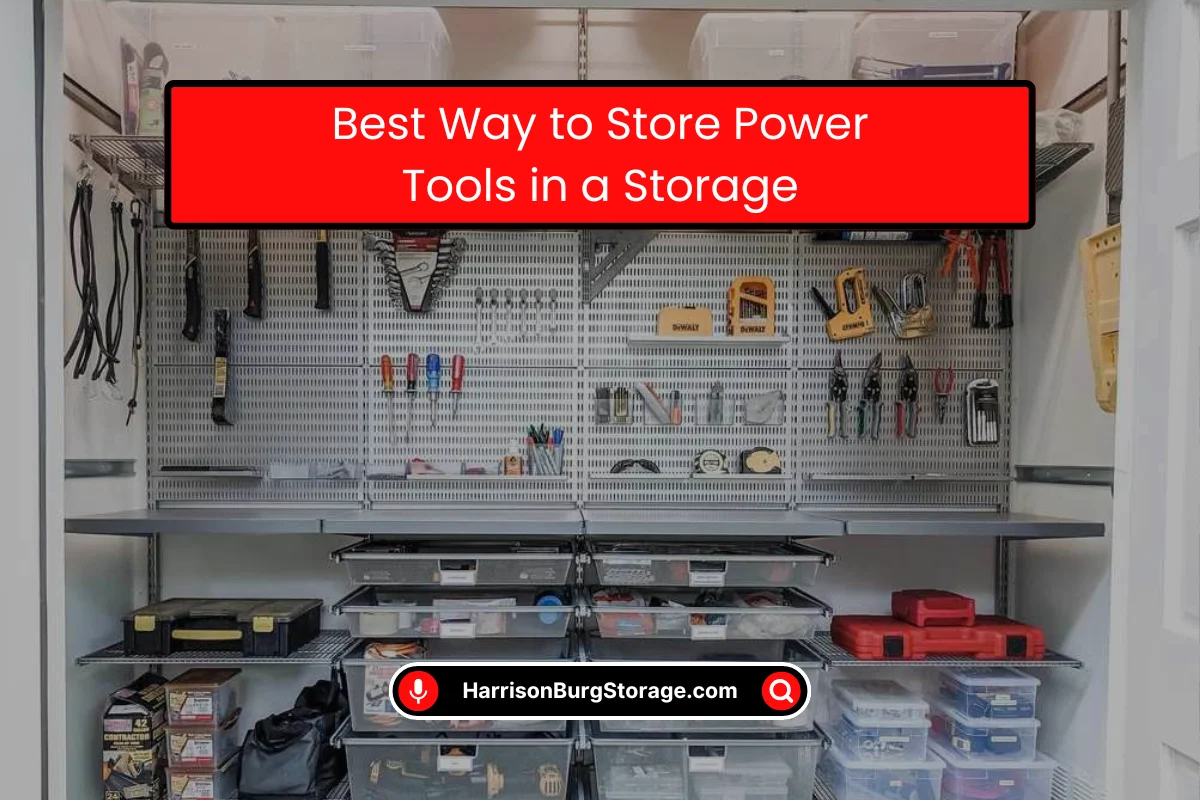
I don’t care if it’s pallets or scrap lumber or those plastic shelf units from the hardware store. Just get your tools off the floor. Two inches of air underneath makes all the difference.
Those Hard Cases? They’re Traps
I hate those plastic cases your tools came in.
I know they look like they’re protecting everything. They’re molded perfectly to your drill, your impact driver, your nail gun. They snap shut and keep the dust out. That’s what they’re designed to do.
But here’s what happens inside them.
You put your tools away after a job. Maybe there’s a little moisture in the air. Maybe the tools are still slightly warm from using them. You snap the case shut and walk away. And now that moisture has nowhere to go. It just sits in there. Circulates. Condenses on the metal parts. Does that over and over every time the temperature changes.
Open that case three months later and it smells like a basement. Everything feels damp. And there’s orange starting to show on your blades.
I don’t use those cases for storage anymore. If I’m putting tools away for any length of time, I leave the cases open. Or better yet, I put the tools on a shelf where air can move around them.
Those cases are great for throwing in the truck. They’re not great for sitting in a dark box for months.
Batteries Are Expensive Little Drama Queens
I had a guy bring me a dead battery pack once. Expensive one. Forty volt something or other. He wanted to know if we had an outlet so he could try charging it. I plugged it in. Nothing. Dead as a brick.
I asked him where he kept it. “In the unit,” he says. “On the floor. Under my workbench.”
For how long?
“Since last summer.”
That battery was done. Lithium-ion packs don’t like being drained all the way down. And they really don’t like sitting that way for months on concrete. Something about the cold and the moisture just kills them.
Here’s what I tell people now. Take your batteries home. They’re small. Throw them in a bag and keep them inside your house. If you absolutely have to leave them in the unit, put them on a shelf. Not on the floor. And check them every couple weeks to make sure they still have some charge left.
Also? Don’t leave them attached to the tools. Even when the tool is off, there’s a tiny drain happening. Over months, that’s enough to kill the battery.
Five Minutes With a Rag and WD-40
I’m gonna tell you something that sounds lazy but actually works. Keep a rag in your tool bag. A dedicated one. And a small can of WD-40.
When you’re done with a job, before you pack everything up, take five minutes. Blow the sawdust off. Then spray a little WD-40 on the rag and wipe down the metal parts. Drill chucks. Saw blades. The bars on your miter saw. Anywhere bare metal is showing.
You’re not soaking it. You’re just leaving a thin film.
That film keeps oxygen away from the metal. Oxygen plus moisture equals rust. Take away one of those and you’re safe.
I know you’re tired after a job. I know you want to load up and leave. But five minutes. That’s all it takes. And it’s a hell of a lot cheaper than replacing a saw.
Yeah, We Have To Talk About Mice
I hate bringing this up because once you mention mice, everybody starts worrying. But I’ve seen what they do to tools and I can’t not mention it.
They love rubber. Cords, grips, the little rubber feet on your tools. They’ll chew it all up. And they’ll nest in your toolboxes if they can get in. Their urine is corrosive. It eats into metal and leaves stains that won’t come off.
If you’re storing tools for more than a couple weeks, put some deterrents in your unit. Peppermint oil works. So do those ultrasonic plug-in things if you have power in your unit. Or just old-fashioned traps around the perimeter.
And before you use anything that’s been sitting, check the cords. A chewed cord can kill you. I’m not being dramatic. That’s real.
What We Tell People Who Rent From Us
Look, we’ve got units here at HarrisonBurg Storage that work great for tools. Climate control if you’ve got nice stuff. Drive-up if you’re storing heavy gear. But no matter which unit you pick, how you put things away matters more than where you put them.
I’m not telling you all this to scare you. I’m telling you because I’ve watched too many people lose good tools and I know it doesn’t have to happen.
Get off the floor. Wipe them down. Take your batteries home. Leave the hard cases open.
That’s it. That’s the whole thing. Do those four things and your tools will outlast you.
Next time you’re in the office, ask me about the guy who stored his grandfather’s old circular saw on the floor for two years. He cried when he opened that case. I don’t want that to be you.







0 Comments